History
100 Years Ago in Suffield
|
Selected from the pages of the Windsor Locks Journal and lightly annotated by Wendy Taylor, Kent Memorial Library.
The Suffield Observer (https://thesuffieldobserver.com/category/history/page/2/)
Selected from the pages of the Windsor Locks Journal and lightly annotated by Wendy Taylor, Kent Memorial Library.
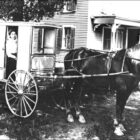
Lizzie Allen delivers the mail on Hill Street.
One of the things I have most enjoyed about living in Suffield is the people who live here. My neighbors are always quick to lend a helping hand, whether it’s letting someone borrow a tool, helping haul brush to the dump or calling one another to get kids and pets indoors when a bear is spotted in the neighborhood. Beyond that, there’s a shared sense of courtesy. When someone is planning work near a property line, we check in with one another, consult, and make sure everyone is comfortable before moving forward. It reminds me of that old expression, “good fences make good neighbors.” But what happens when those fences—or more accurately, those boundaries—are not clear at all?
October 2 Spaulding gardens is increasing the capacity of their output by erecting a new greenhouse about 300 feet long. This, added to the present plant, will make one of the largest plants of this kind in this section October 9 The house owned and occupied by Joe Smith was burned to the ground Wednesday night, with its contents. The fire started about 10.45[p.m.] and in a short time was blazing fiercely. Fortunately, Mrs. Smith had not gone to bed as she was waiting for Mr. Smith, who is employed in a paper mill at Windsor Locks and returns home on the 11 o’clock bus. Mrs. Smith smelled smoke and aroused the children sleeping upstairs and they had just time to get outside with what clothing they were wearing.
This year, the Suffield Historical Society has extended the King House Museum & Barn tour dates through October 11—giving you even more time to experience this local treasure. October’s crisp air and vibrant foliage make it the perfect season to step outside and explore. During your visit, you’ll uncover stories from Suffield’s past and the legacy of the King House itself. Plus, don’t miss the Artists of Suffield exhibit, still on display and showcasing the creative spirit of our community. The King House Museum & Barn is open Wednesdays and Saturdays from 1 to 4 pm.
One of the things I have most enjoyed about living in Suffield is the people who live here. My neighbors are always quick to lend a helping hand, whether it’s letting someone borrow a tool, helping haul brush to the dump or calling one another to get kids and pets indoors when a bear is spotted in the neighborhood. Beyond that, there’s a shared sense of courtesy. When someone is planning work near a property line, we check in with one another, consult, and make sure everyone is comfortable before moving forward. It reminds me of that old expression, “good fences make good neighbors.” But what happens when those fences—or more accurately, those boundaries—are not clear at all?
October 2 Spaulding gardens is increasing the capacity of their output by erecting a new greenhouse about 300 feet long. This, added to the present plant, will make one of the largest plants of this kind in this section October 9 The house owned and occupied by Joe Smith was burned to the ground Wednesday night, with its contents. The fire started about 10.45[p.m.] and in a short time was blazing fiercely. Fortunately, Mrs. Smith had not gone to bed as she was waiting for Mr. Smith, who is employed in a paper mill at Windsor Locks and returns home on the 11 o’clock bus. Mrs. Smith smelled smoke and aroused the children sleeping upstairs and they had just time to get outside with what clothing they were wearing.
Old Photos Invited from Our Readers
Photo provided by Art Sikes from the KML Archives Inside the Hill Street School Last month we featured the Hill Street school from the outside. Here is what it looked like on the inside. It looks like it is set up for about 35 students, with lots of blackboard space and a stove to keep everyone warm in the wintertime.
There was an error in the September Observer on the page of historic house photos. The caption for the Gay Mansion states that it is now the home of the Suffield Academy headmasters. That is incorrect. They live at the Gay Manse. We apologize for the error.
Who was your first immigrant ancestor? What countries did your ancestors live in? What jobs did they do? What traditions and items did they bring with them? Have you ever wondered about them?