History
100 Years Ago in Suffield
|
Selected from the pages of the Windsor Locks Journal and lightly annotated by Wendy Taylor, Kent Memorial Library
The Suffield Observer (https://thesuffieldobserver.com/category/history/page/19/)
Selected from the pages of the Windsor Locks Journal and lightly annotated by Wendy Taylor, Kent Memorial Library
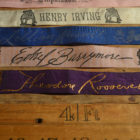
Cigar smoking became popular in the United States after the Revolutionary War and was wildly popular during the Civil War. Think of the photographs of Ulysses S. Grant chomping on a cigar.
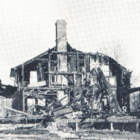
There wasn’t much left at the Suffield Country Club on the morning after the 1932 New Year’s Eve fire.
Selected from the pages of the Windsor Locks Journal and lightly annotated by Wendy Taylor, Kent Memorial Library
Selected from the pages of the Windsor Locks Journal and lightly annotated by Wendy Taylor of Kent Memorial Library.

The bridge carrying the town’s “road to the mountain” over the NY, NH, & H railroad is seen here from the neighboring property to the northeast, now 1310 Mountain Road.

Ides, a Roman terminology, is the middle of the month, according to some alignment with the moon. The Ides in March, May, July and October are on the fifteenth. In other months, the Ides lands on the thirteenth. In Caesar’s time, the Ides of March was a celebration day. It was meant to honor Mars, the Roman god of war, in the month named after him.
Selected from the pages of the Windsor Locks Journal and
lightly annotated by Wendy Taylor of Kent Memorial Library.

Some of the stores along Main Street were already closed in this circa -1966 view of the Town Center, looking south toward Bridge Street a few years before demolition for redevelopment. The large building at the right is the old Town Hall, vacant since 1963.
Selected from the pages of the Windsor Locks Journal and
lightly annotated by Wendy Taylor of Kent Memorial Library.